What are the positive and negative issues related to Thailand fashion?
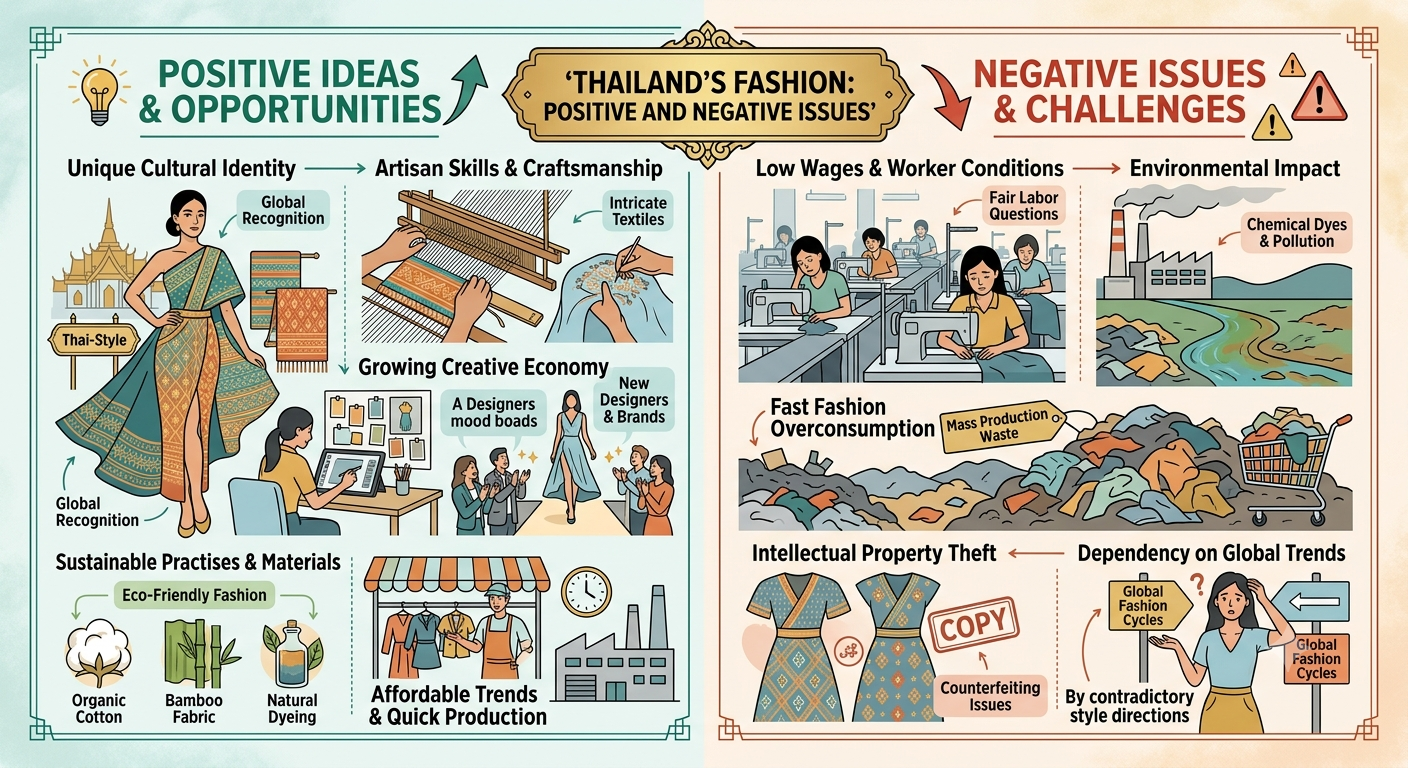
Thailand’s fashion industry thrives on a rich heritage of textiles and a booming local design scene, yet it wrestles with significant environmental and ethical hurdles. While traditional craft supports rural communities and eco-friendly slow fashion gains momentum, the widespread fast-fashion culture fuels high consumption and massive textile waste.
The Positives
- Artisanal Heritage & Natural Materials: Thailand’s industry is deeply rooted in eco-friendly traditions. Indigenous techniques—such as hand-spinning Thai silk and cotton, or using non-toxic natural dyes (e.g., indigo, lac)—support rural artisan communities while remaining completely biodegradable.
- Global Influence & Creativity: Homegrown design is blossoming. Bangkok’s streetwear, athleisure, and luxury sectors are gaining international recognition, with government initiatives actively promoting Thai textiles and “soft power”.
- Circular Innovation: Brands and designers are stepping up. Innovative local businesses and upcycling boutiques are utilizing deadstock fabrics, recycling factory scraps, and shifting toward zero-waste, slow-fashion models.
The Negatives
- Fast Fashion Overconsumption: Thai consumers discard a staggering amount of clothing. Driven by cheap pricing and e-commerce accessibility, surveys suggest that up to 40% of Thais dispose of clothing items after wearing them only a handful of times, filling landfills with non-biodegradable synthetics.
- Labor Exploitation & Debt Bondage: The garment and textile sectors heavily rely on migrant workers who often face protection gaps. Many are forced to pay exorbitant recruitment fees and high interest rates on loans up front, making them highly susceptible to debt bondage.
- Intense International Competition: Thailand struggles to compete on price with massive manufacturing hubs like Bangladesh and Vietnam. Additionally, the country must heavily import raw materials like cotton and yarn to meet its production demands.